ALEXANDRITE
One of the rarest and most unusual gemstones ever discovered, alexandrite is the only stone that can be both green and red. The gemstone, which is part of the chrysoberyl family (not to be confused with Beryl), is one of the only gems that can fully change colors.
This rare phenomenon is called pleochroism. That means that under an incandescent light source, the gem looks ruby red. And under a fluorescent light source, the same gem can switch to emerald green. That full-color switch is seen in only the finest example of the gem. More frequently, the stone will shift from a dark bluish-green with gray undertones, to a purplish-red. The color shift is measured by percentages and is a large factor in determining the value of the gem. Anything above a 60% color change is highly collectible. Another contributing factor is the size of the stone. Anything over one carat is considered large, and stones over 3 carats are nearly impossible to find.
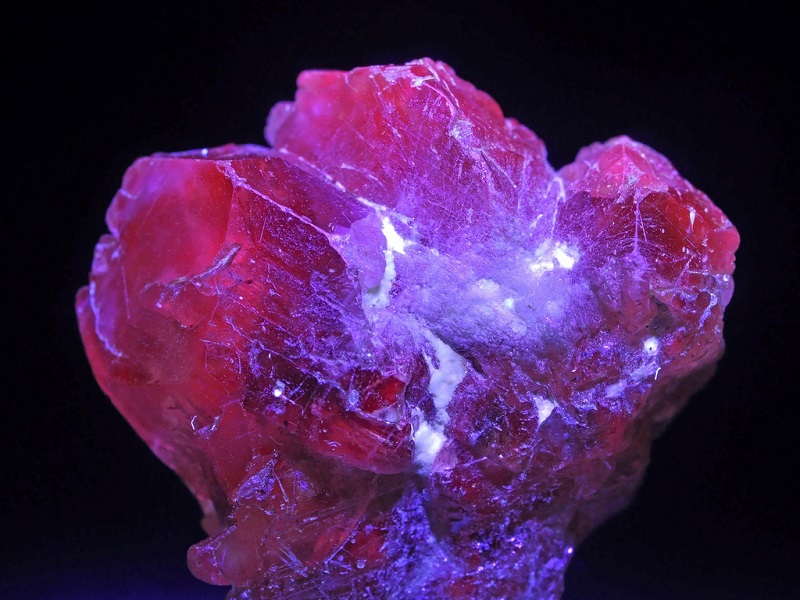
Alexandrite is a relatively new gemstone as it was first discovered in the Ural Mountains of Russia in 1834. The stone was named after Alexander II, the Czar of Russia. Because the stone showed both the national colors of Russia (green and red), the stone was named the official stone of Imperial Russia. Czar Alexander immediately sent a large mining force into the mountains to collect all of the gems. All of the stones that were mined were considered the property of the Royal family. Soon a few stones that were smuggled from the mines started showing up in the markets. Czar Alexander passed a decree that anyone possessing these stones other than the Royal family was guilty of theft against Russia, a crime punishable by death. It wasn’t until almost a hundred after its discovery, and the Russian Revolution, that the stones were available to the general population.
In order for chrysoberyl to show the chameleon-like behavior, the crystal must grow in an environment where chromium is also present in the early stages of growth. This is a very rare occurrence and has only happened in a few places. Russia mines produced stones for about 40 years. There were a few small deposits found in Ceylon in the mid-1900s, although they yielded very few gems.

It was not until a new discovery in 1987 in Brazil, and another small one in 1993 in Mozambique, that Alexandrite was mined anywhere else on the planet. All of the sources proved to be small and finite. Also, very few stones over one carat were ever discovered. This extreme rarity makes Alexandrite one of the most prized collector gems. Most Alexandrite stones are now housed in either museums or private collections.
This truly phenomenal gem is exceedingly rare, and therefore quite expensive. One carat stones in the 60-70% color change can command $20,000-$30,000 per carat. If the same stone was 3-4 cts it would bring $70,000-$100,000 per carat. Large 100% color change Russian stones can become million dollar gems very quickly. Brazilian stones can show the same degree of color change and can command equal prices.
HISTORY/FOLKLORE
Because Alexandrite is a relatively new gemstone, its spiritual connection is more in line with the gem itself. Because of the chance, rare, natural occurrence of the gem itself, anyone wearing an Alexandrite is said to experience good luck, good fortune, and eternal love. Like its color change, it helps its wearer see both sides of any issues and credits understanding. It is also said to bring balance between the physical world and the eternal, spiritual world. The stone is also associated with sophistication and high social standing, a direct reference to its original history.
WEARING & CARING
Alexandrite is an 8.5 out of 10 on the Mohs hardness scale. This makes it one of the hardest known gemstones, with only sapphire and diamond being harder. The stone also has no natural cleaves and rarely chips. Alexandrite is considered a very good stone to be worn in jewelry.