CAT'S EYE
Cat’s eye is the gem industry name given to a very rare form of chrysoberyl that displays a unique optical effect. Cat’s eye is also a term used to describe the same optical effect in other gemstones. This can lead to some confusion. The cat’s eye effect in a gemstone occurs when a stone is polished into a cabochon dome and a light band of concentrated white light stretches along the top of the dome. The linear band in the stone gives the appearance of a cat’s eye. The best example of this optical effect occurs in the gemstone chrysoberyl. Because of its intensity in this gemstone, the name cat’s eye was given as this gem’s name. When the general name cat’s eye is used, it refers to a chrysoberyl cat’s eye. If this same effect is seen in another gem, the word cat’s eye is used as a description followed by the gem’s proper name. For example, a cat’s eye tourmaline or a cat’s eye aquamarine.
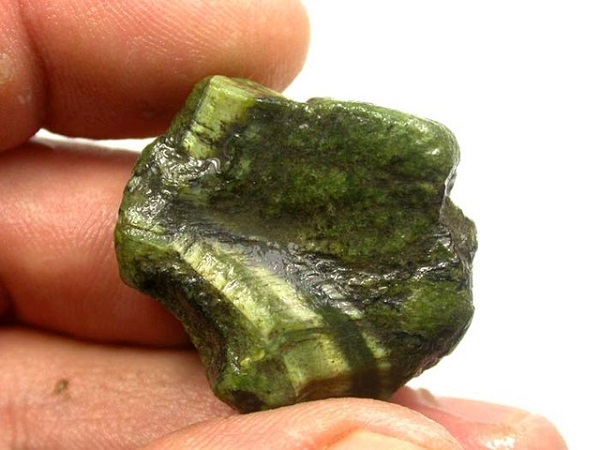
Another reason cat’s eye is misunderstood is due to extreme rarity. The crystal chrysoberyl (not to be confused with beryl) is a rare, occurring crystal that occurs in three varieties. The first is a clear greenish-yellow transparent gem that is faceted and displays great sparkle and life. This is called chrysolite. The second variety happens when the same chrysoberyl crystal is formed, and chromium is infused into the crystal lattice. This creates a gem that changes from red to green, in different light sources. This rarity is called Alexandrite. The third variety of chrysoberyl occurs when small tube-like rutile crystals form within the crystal as it is forming. This variety is called cat’s eye.
The optical effect in cat’s eye is called chatoyancy. This happens when the gem is polished into a domed cabochon in a specific direction. The small internal rutile crystals are all lined up parallel within the crystal’s internal structure. Rutile is a long white thin crystal that is very reflective. When cat’s eye is exposed to light, the rutile acts as a fiber optic and reflects the light back as a white opulence that extends across the top of the dome. The finest examples have the illusion where the light band, or cat’s eye effect, seems to form just above the surface of the gemstone, creating almost a hologram effect. The finest examples of this gemstone have a light-yellow gold body color and a bright white cat’s eye. These stones are referred to as “Milk & Honey.” The honey being the body color of the gem, the milk being the eye. This stone does vary in shade and can be found in a light greenish yellow or chartreuse through to the golden yellows and dark brownish yellow. It can also form in an almost black color. The lighter golds and yellow greens command the highest prices. Another factor in the price is the balance of transparency versus definition of the eye. This is because rutile causes the transparent crystal to start to look cloudy as it becomes more concentrated inside the crystal. Too much rutile will lead to a translucent, not transparent stone showing a very bright, defined eye but with the transparent look of honey.
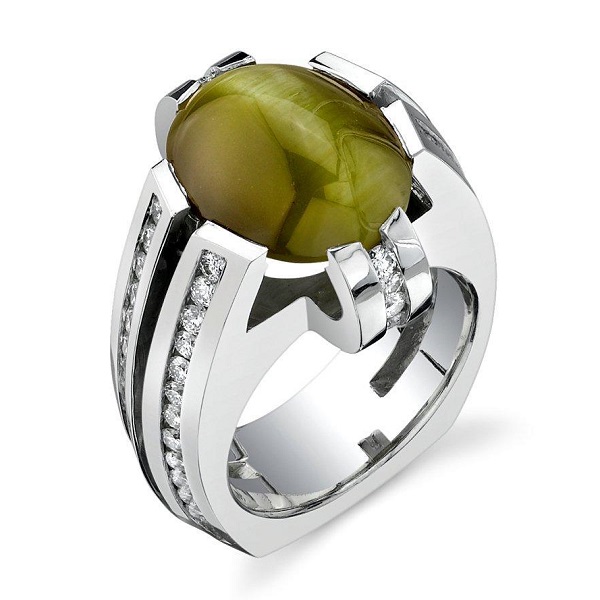
Conversely, not enough rutile leads to high transparency, but a duller, undefined cat’s eye. The goal is to find the perfect natural balance. A stone that has the transparency of honey, while having a bright defined eye, that is straight, unbroken, and runs from edge to edge of the stone. The overall body color is personal preference, but it is somewhat an indicator of the gem’s birthplace. The main sources of chrysoberyl cat’s eye are Sri Lanka (Ceylon), Russia, and Brazil. In general, the more golden based stones are from Ceylon or Russia whereas the Brazilian stones are more greenish yellow. The chrysoberyl found in both Russia and Brazil have rutile (the cat’s eye effect) and chromium (the color changing effect) impurities within the crystal. This exceptionally rare gem is called cat’s eye alexandrite and ranks among the top of all collectible gemstones.
All cat’s eye gems are very rare and very few people have actually seen an example. Most are in museums and private collections. There are other gems that display this same cat’s eye effect that should be noted. If the same rutile inclusions form in other gems along linear crystal plains, the effect can be produced. Here are a few:
Cat’s eye tourmaline – these stones are most common in green tourmaline and rarely occur in pink or red tourmaline. The rutile inclusions are usually much larger in tourmaline and are visible inside the stones. These stones are quite rare and expensive, commanding 3 to 4 times the price of their faceted counterparts.
Cat’s eye aquamarine – This light blue milky stone usually has a faint line. These stones are also very rare and special and are usually in museum collections. The cat’s eye aquamarine is 5 to 10 times more valuable than a clear, faceted aquamarine.
Cat’s eye moonstone – This is white feldspar that has a brighter band of white that is more defined than other cat’s eyes, but equally captivating.
Cat’s eye quartz – This is usually a clear quartz that has either gold or black rutile inclusions. The individual rutile crystals are large and reflect light if they are aligned parallel. This is an inexpensive, but interesting form of cat’s eye.
Sillimanite cat’s eye – This is a dark brown or greyish stone that shows a very nice eye effect. It was first discovered in Maine in 1824. Today, these gems are also found in Sri Lanka. This is a mid-priced alternative to chrysoberyl cat’s eye.
It bears noting there is another commonly confused gemstone with cat’s eye. It is brown and yellow banded quartz called tiger’s eye. The name given to this relatively abundant and inexpensive crystal was a direct reference to the very rare cat’s eye chrysoberyl, but it is in no way geologically related.
HISTORY & FOLKLORE
The name chrysoberyl comes from the Greek word “chrysos” meaning golden and beryl, which is a reference to its Beryllium content. This gem has been prized for thousands of years. Early finds in Southern Asia were highly collected by Asia’s dynasties. The polished stones were thought to be magical and provide protection from the evil eye. It also was given to any military leader to help them in battles. The stone was to give the barer an all-seeing power, ensuring that the army could not be surprised and defeated. In the 18th and 19th century, these stones were highly prized in Spain and Portugal. It was believed that if you gave your lover a cat’s eye and they were away, you could see through the cat’s eye in your dreams and visit them wherever they were. So if you want to always keep an eye on your loved one, then this is the gem for you. Demand for the stone reached its high point in the 19th century in Europe when the Duke Connaught gave a cat’s eye as an engagement ring. Today, supply is very limited and these stones usually end up in private collections.
WEAR & CARE
Chrysoberyl cat’s eye is the 3rd hardest gemstone available with a hardness of 8.5 out of 10. The stones are very tough as well. However, any stone can be damaged by excessive abuse.