ZIRCON
Often names can be misleading. One of the most beautiful and brilliant gemstones is often overlooked or forgotten simply because of its name: Zircon.
Zircon is a naturally occurring gemstone that is the oldest recorded crystal on the planet. Zircon crystals were formed as the earth cooled after its creation. (Talk about a “true” birthstone). It mostly formed in very small crystal sizes. Most sand from anywhere on earth is 10-15% zircon crystal. On rare occasions, crystals formed larger, but since they grow in the same crystal shape as a diamond, with terminating points at both ends, large crystals are rare. The largest deposits of Zircon that are large enough to be cut into gemstones are located in Australia, which produces around 40%, and South Africa, which produces about 30%. Other small deposits have been mined in Thailand, Cambodia, Sri Lanka, and the United States.
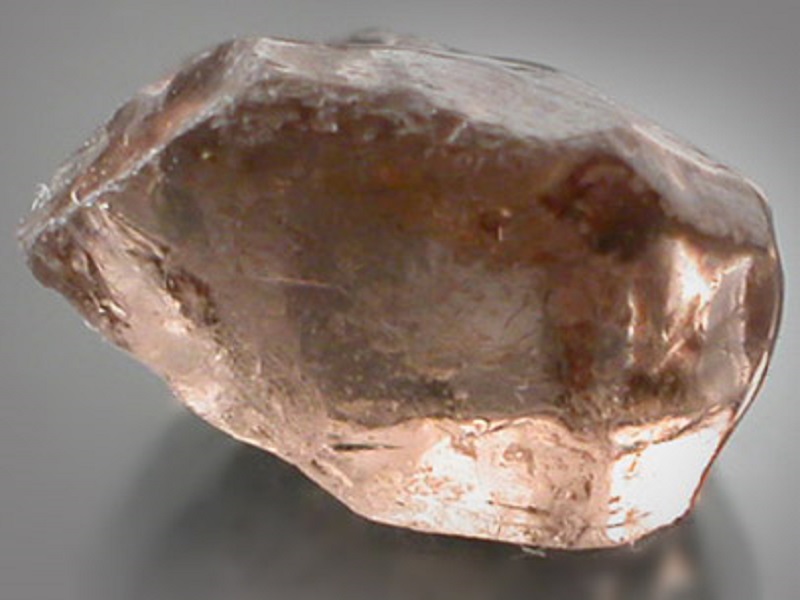
Zircon is a stone that comes in a large array of colors. The crystal is often found clear. Browns and yellows are next most common. The blue and reds are the rarest forms. The color is determined by other elements that were infused in the crystal as it was forming. The thing that is truly outstanding with Zircon is its brilliance. Zircon has the second highest refractive index, which causes the gem to have brilliance and sparkle that nearly equals diamond. This brilliance is both a gift and a curse for this fabulous gem. That internal fire made the gem popular through history. Brown and yellow sapphires were a favorite among the ancient Greeks. The bright blues were cherished and collected although the Victorian age. But then in the 1920s people started to notice the clear variety. It was found that round, faceted stones were almost indistinguishable from their counterpart diamond. From this point on, the clear crystals become a fashionable substitute for diamonds. It was common in the 1940s to have a sapphire or ruby surrounded by natural white Zircons. It was also at the time that diamond mining expanded, and the market started to increase both in terms of demand and prices of diamonds. As diamonds increased in price, Zircon became a cheaper alternative to diamond. Also, as diamond pricing increased, companies were trying to create man-made alternatives to diamonds. In 1976, a man-made simulant that mirrored a natural diamond was created in a lab. The inventors wanted a name that sounded like a natural stone to help market the stone. They called the synthetic stone cubic zirconia. Borrowing part of the name from the natural and historic Zircon. Over time these stones become the common alternative to diamond, and within one generation the name Zircon became confused with the man-made stone. Interesting how the Earth’s oldest known crystal can have its identity taken away by a confusing marketing campaign.
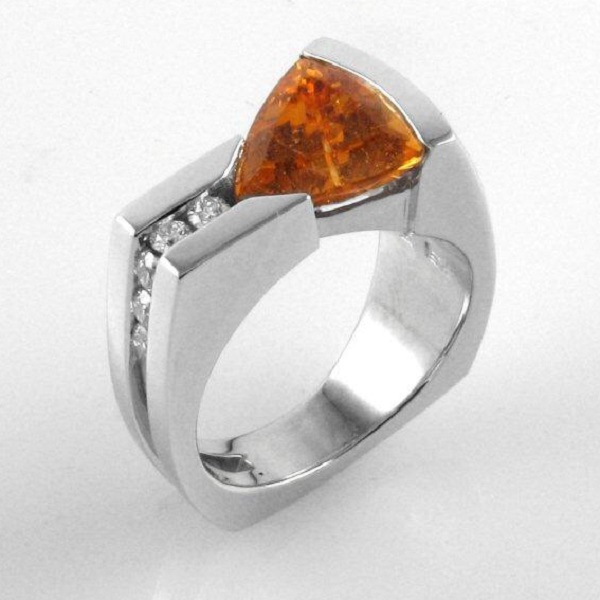
Educated buyers and collectors understand the distinction between Zircon, a rare natural gem, and cubic zirconia, a man-made simulant to a diamond.
When buying a Zircon, the hardest thing to find is size. Stones over 3 carats are very rare. The lighter more open blue that is commonly seen as December’s birthstone is both unique in its color and unmatched for its brilliance. Zircon is highly prized by collectors worldwide. The reddish brown and golden zircons are equally as beautiful as diamonds of similar colors.
HISTORY AND FOLKLORE
Zircon history is as old as the earth itself. The crystals were formed as the earth cooled and were colored by either the surrounding elements, or in many cases, the radiation that was present as the earth was forming. Even today, 4.4 billion years later, some zircons still have a trace of that radiation present. A mild heating process can both stabilize the color and exhaust any trace of radiation. For this reason, almost all Zircons are gently heated as a preventative measure.
In ancient times, Zircon was thought to induce sound sleep and prevent nightmares by driving away evil spirits. It was also believed to promote wealth, wisdom, and honor for the wearer. Spiritually the meaning is tied to the gemstone’s origin: creation. The gem is supposed to represent new beginnings and new ideas or thoughts. The stone is said to bring good fortune for those in transition.
WEARING AND CARING
Zircon is a 7.5 on the Mohs Hardness Scale. This indicates that the stone is not very likely to scratch. The gem does have natural cleavages in two directions. This makes it more susceptible to chips, especially at the facet junctions. It is, therefore, recommended to be worn with caution and care. The stone should be worn and set in a way that prevents it from any direct blows to the stone. Pendant and earrings are excellent options for Zircon.